
Shyama Hospital
Multispeciality Hospital
Welcome to
Care You Can Trust
Multispeciality Hospital
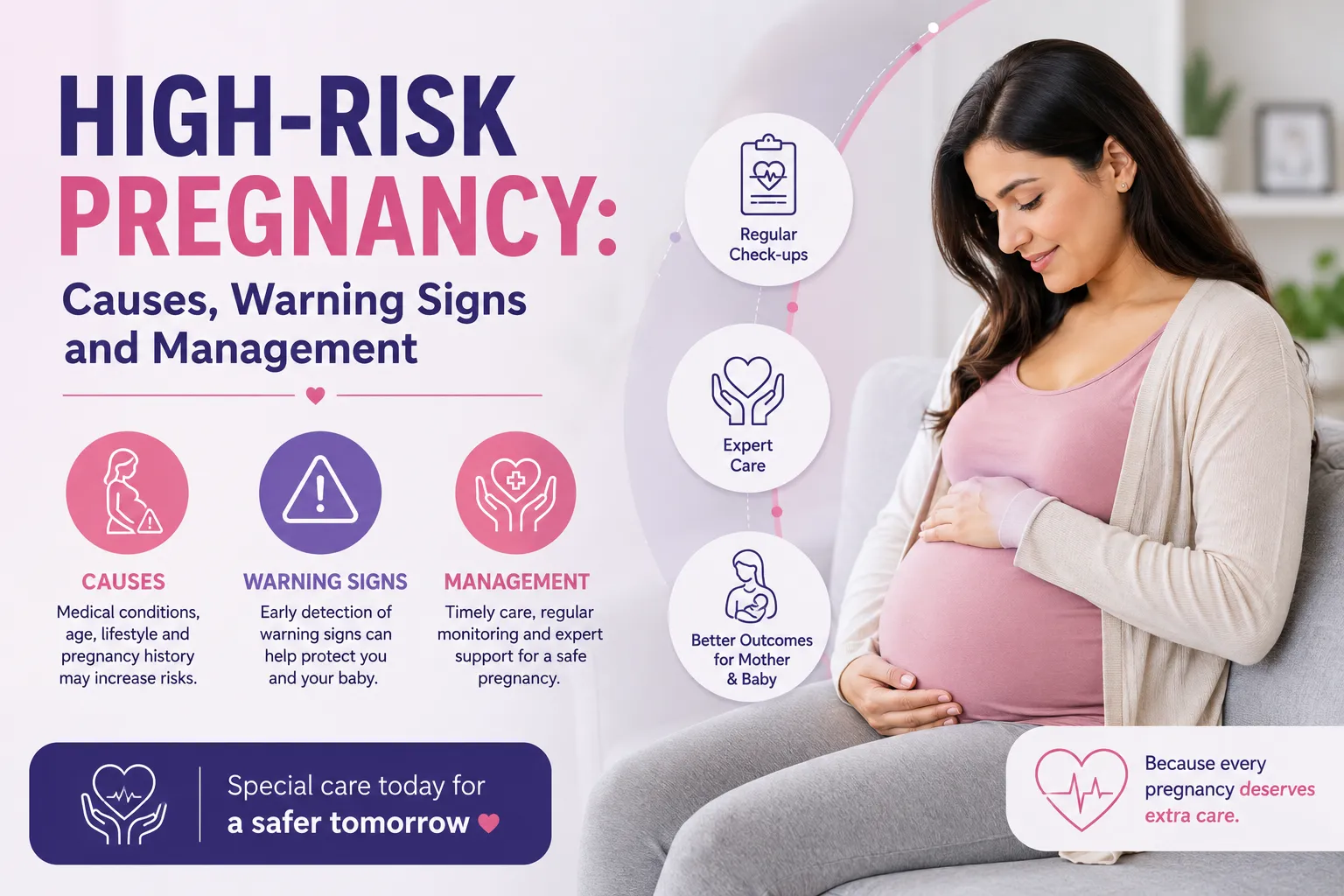
A high-risk pregnancy requires closer monitoring and expert attention to ensure the best outcome for both mother and baby. This article explains the causes, warning signs, and important management steps doctors recommend for high-risk pregnancies.
Dr. Yogendra Singh
Senior Specialist
Written by
A pregnancy is considered high-risk when factors are present that increase the chances of health complications for the mother, baby, or both. If your doctor classifies your pregnancy as high-risk, it means more careful monitoring is needed, and with proper management, positive outcomes are common.
High-risk pregnancy refers to situations where the health or life of the mother, baby, or both could be at greater risk than in a typical pregnancy. This requires extra attention and specialized care throughout pregnancy and delivery.
Several factors can cause a pregnancy to be categorized as high-risk. Understanding these can help in early intervention and better management.
It's crucial to recognize warning signs that require immediate medical attention during a high-risk pregnancy. Contact your healthcare provider right away if you notice:
Management plans for high-risk pregnancies are highly individualized. Common components include:
In addition to medical care, self-care practices support your wellbeing and improve pregnancy outcomes. Focus on:
A high-risk pregnancy can feel overwhelming, but most women deliver healthy babies with good medical care and support. Stay informed, follow your doctor’s advice, attend all appointments, and don’t hesitate to ask questions. Timely action, self-care, and teamwork with your healthcare provider can lead to positive outcomes for you and your baby.
Schedule an appointment with our experienced specialists and receive personalized care tailored to your health needs.
Call +91 8871272677